
Metallurgical Process Modelling & Simulation
Modelling used to size, compare and decide — not to decorate a report.
Modelling earns its place when it changes a decision: sizing a unit operation, comparing competing routes on a common basis, or identifying which assumption the outcome is most sensitive to. A model that only confirms what is already known is not worth commissioning.
How does modelling support process work?
Modelling lets options be compared before any of them are built. It sizes equipment, closes balances across a circuit, and shows which variables the result actually depends on.
It does not replace test work. The value comes from the loop between the two: the model predicts, the test work measures, and the difference between them corrects the understanding of the material.
Software capability
Each tool is applied where it is the right instrument for the question.
FactSage
Thermochemical calculation and phase equilibria for high-temperature systems.
HSC
Metallurgical and process calculations including balances and flowsheet evaluation.
STAR-CCM+
Computational fluid dynamics for flow, heat and transport behaviour.
MATLAB
Analytical work, data handling and custom process models.
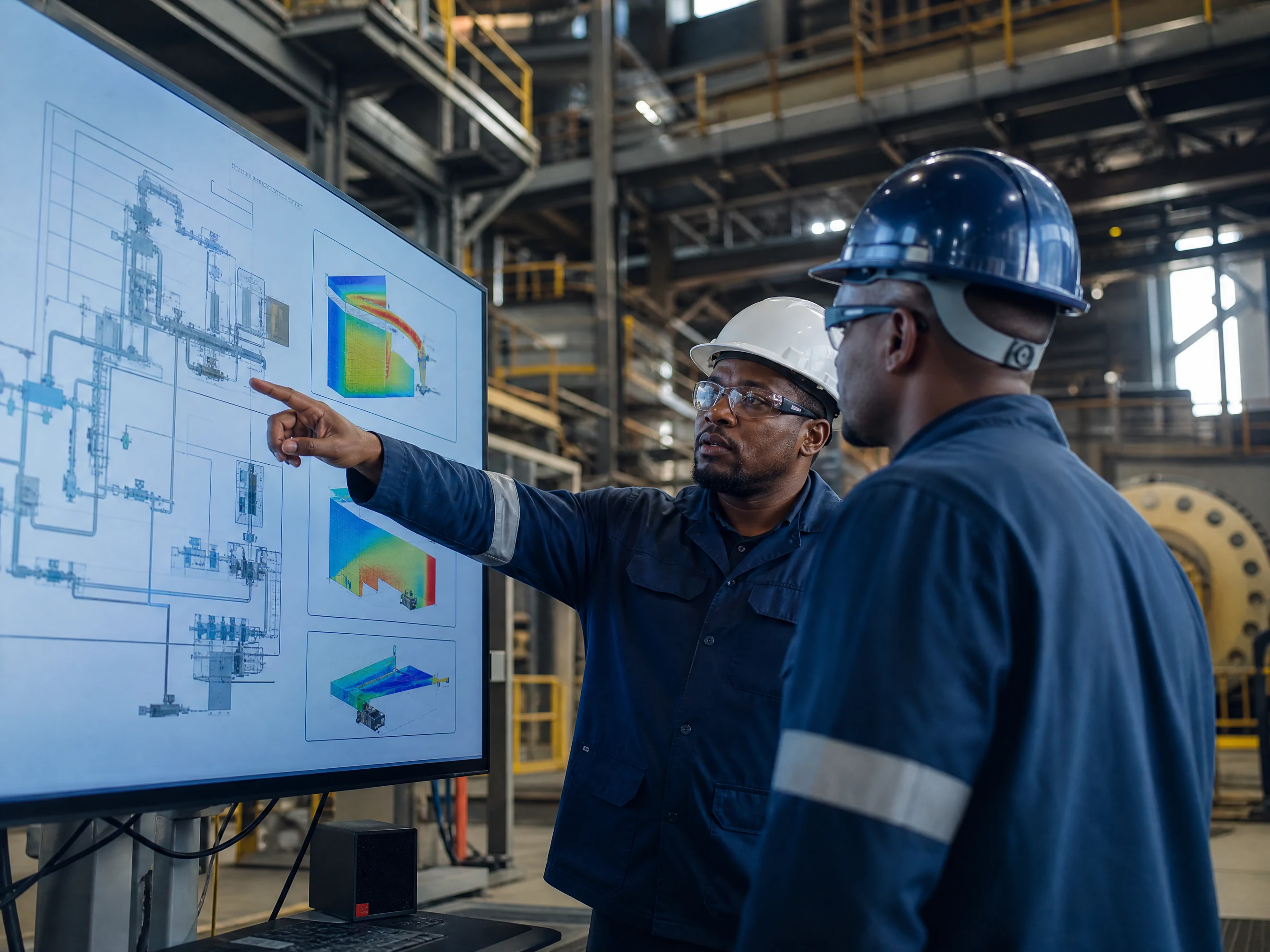
Modelling and balances are the same exercise
Mass and energy balances are where modelling meets reality. A balance that closes tells you the picture is internally consistent; one that does not tells you something is missing from the understanding.
We close balances across the full circuit rather than per unit operation, because recycle streams are where the errors usually hide.
- Balances closed across the whole circuit, recycles included
- Predicted values compared against measured test results
- Sensitivity analysis to expose the assumptions that matter
Model, test, compare, refine
Scale-up decisions come out of this loop rather than out of any single model run.
Model
Predict circuit behaviour from what is currently understood about the material.
Test
Measure actual behaviour under controlled bench or pilot conditions.
Compare
Examine where prediction and measurement diverge, and why.
Refine
Correct the model, the assumptions, or the understanding of the material.
Decide
Support the scale-up decision with numbers that have survived the loop.
Discuss your material or process challenge
If you hold a residue stream, by-product, tailings resource or slag with possible recoverable value — or a process that is not performing as designed — we are interested in the technical detail.