Metal Recovery & Industrial Waste Beneficiation
Turning residues, slags, tailings and fine fractions into recoverable product.
Recovery and beneficiation means extracting valuable metals and minerals from material that has already been through a process once — and upgrading marginal streams to a specification a buyer will accept. The route follows from what the material will give up, not from a standard template.
What is recovery and beneficiation?
Recovery is the extraction of valuable metals or minerals from a feed stream. Beneficiation is the upgrading of that stream — raising grade, removing deleterious material, and bringing a product within specification. In a residue context the two usually happen together.
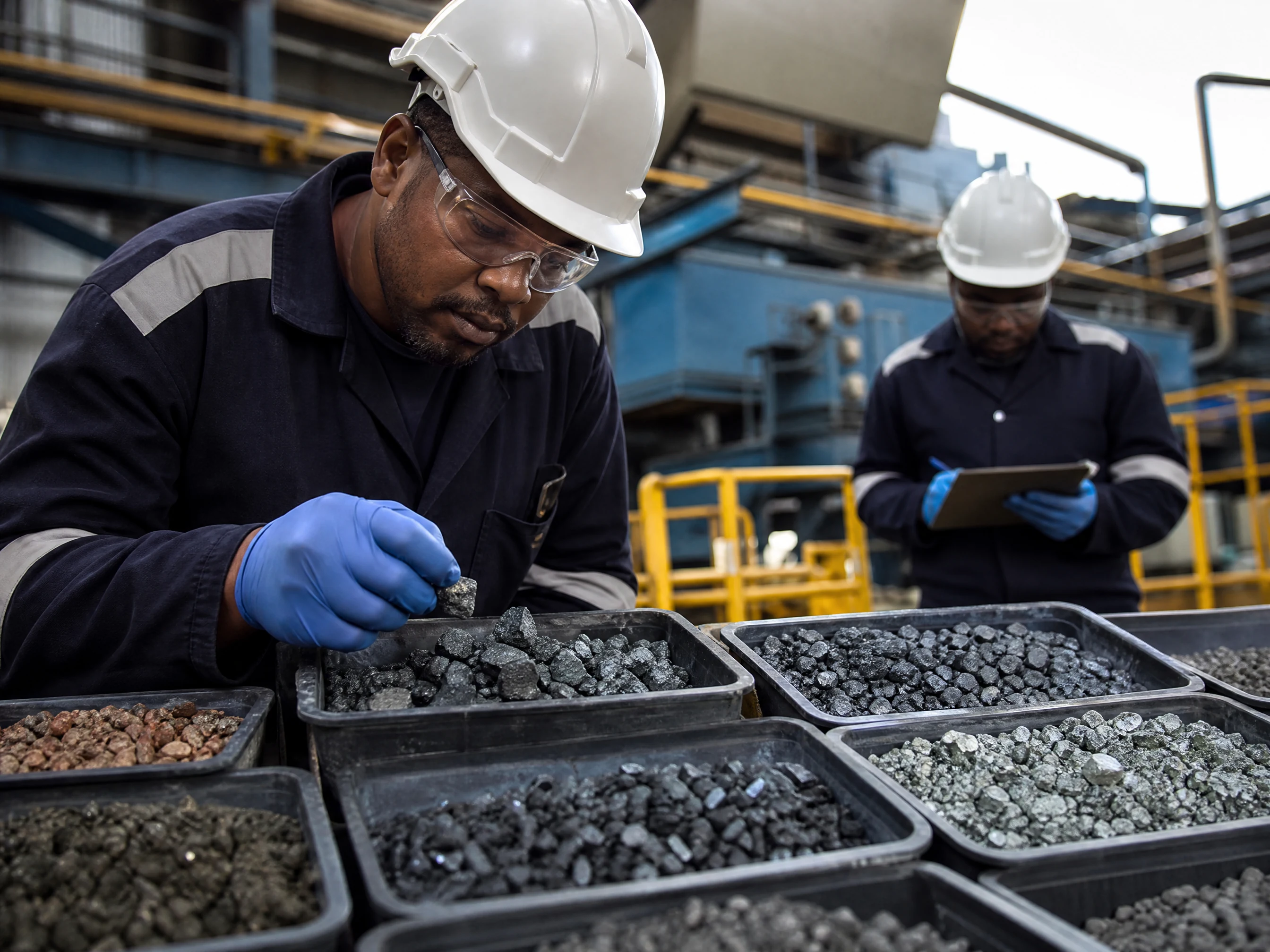
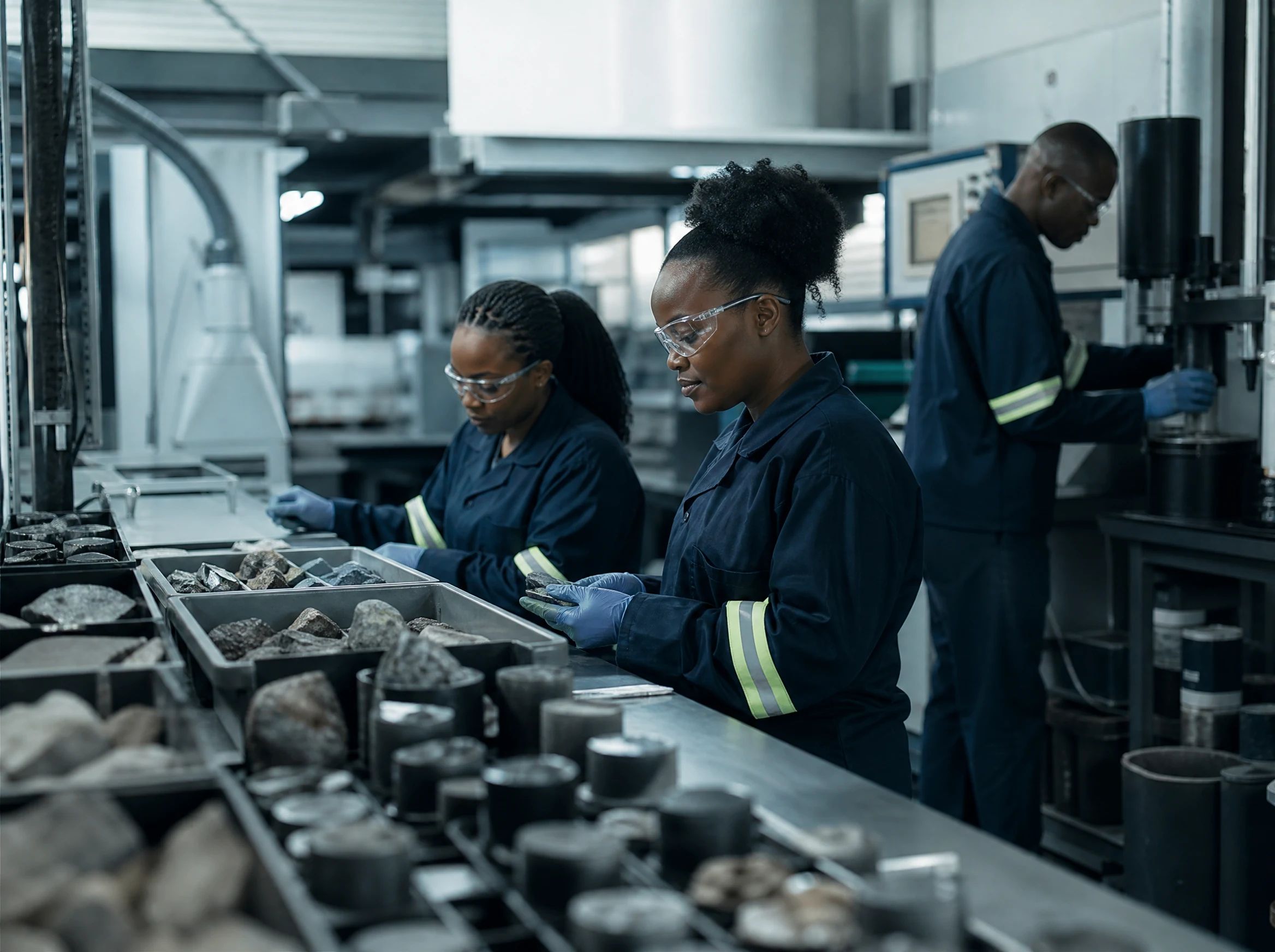
VIIS applies this to industrial residues, metallurgical by-products, ferroalloy residues, tailings, slags and fine mineral fractions. Which technologies apply depends entirely on characterisation: liberation, particle size, density contrast, magnetic response and mineralogy.
Feed streams we assess
Each behaves differently, and each is characterised before any route is proposed.
Maximise recovery, reduce what is discarded
The objective is rarely recovery alone. It is the best achievable recovery at a grade the market accepts, at a cost the project can carry, with less material left over at the end.
Those three pull against each other. Establishing where the sensible balance sits for a specific material is the substance of the work.
- Target element and product specification defined up front
- Grade, recovery and cost assessed together rather than in isolation
- Reduced residue volume as a direct outcome of the route
Technologies we screen
Selection is driven by material behaviour established through test work, not assumed at the outset.
Gravity Separation
Conventional and enhanced gravity separation where density contrast supports recovery.
Dense Medium Separation
DMS for coarse pre-concentration and early rejection of barren material.
Flotation
Surface-chemistry-based separation for finer fractions and complex mineralogy.
Magnetic Separation
Magnetic and electromagnetic separation across a range of intensities.
Pre-Reduction
Thermal pre-treatment to change phase behaviour ahead of downstream recovery.
Integrated Routes
Combined circuits where no single technology carries the full recovery duty.
Physical separation is often only the first stage
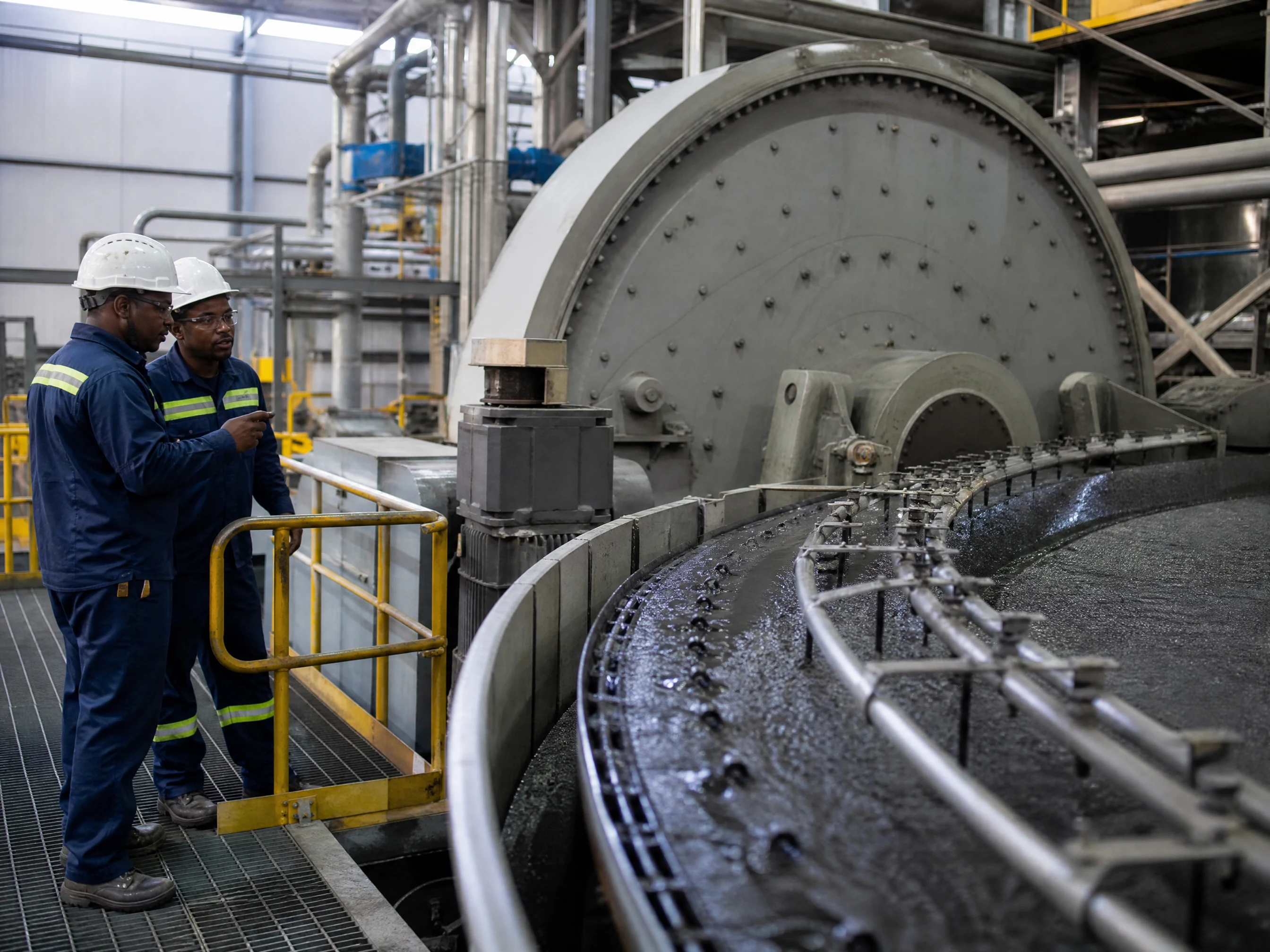
Many residue streams will not release their value through physical separation alone. Where that is the case, the route integrates a pyrometallurgical or hydrometallurgical step behind the separation circuit.
The decision to add a thermal or aqueous stage is a technical and economic one, taken on test evidence rather than preference.
- Physical pre-concentration ahead of thermal or aqueous processing
- Leaching or smelting where the target is not physically liberated
- Integrated circuits designed and balanced as one system
How a route is proven
No route is recommended for scale-up until the test work supports it.
Characterise
Chemistry, mineralogy, particle size and deportment of the target element.
Screen
Compare candidate technologies against how the material actually behaves.
Bench Test
Controlled bench-scale work designed to discriminate between routes.
Model
Mass and energy balances to size the circuit and expose sensitivities.
Pilot
Integrated pilot running where scale-dependent behaviour carries real risk.
Engineer
Process engineering and implementation support for a proven route.
From a validated route to an operating one
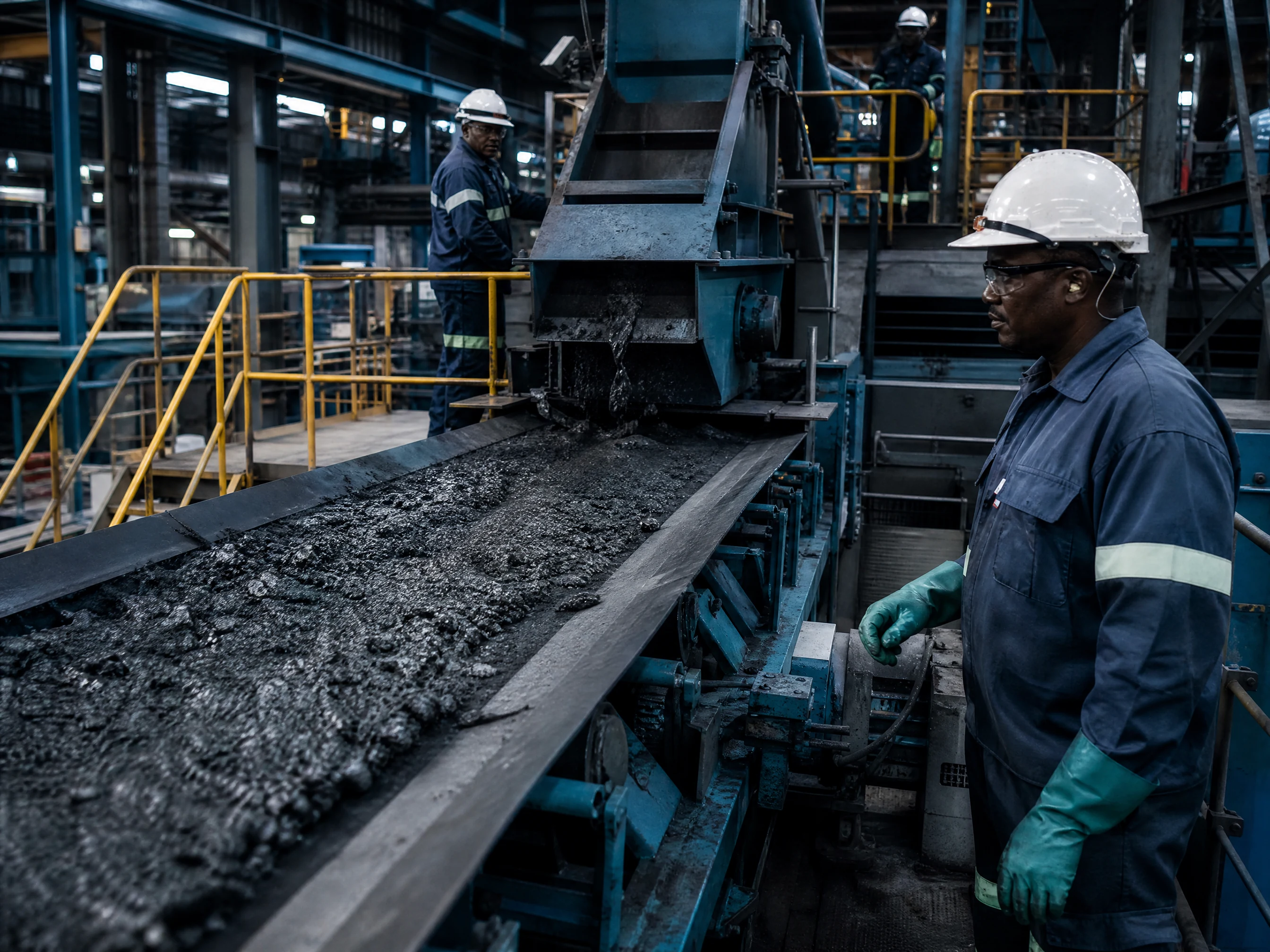
A validated flowsheet is the point at which a project becomes financeable rather than speculative. From there the work turns to engineering, product specification and placing the recovered material.
VIIS stays involved through that transition, because the assumptions made during development are the ones that have to hold in operation.
Commercial SupportFrequently asked
Industrial residues, metallurgical by-products, ferroalloy residues, tailings, slags and fine mineral fractions are all candidates. Whether a given stream is worth processing is a question of characterisation, not category — two slags from different furnaces can behave completely differently.
By establishing how the target element is held in the material — its liberation, particle size, density and magnetic response — then screening the technologies that exploit those properties. Bench work then discriminates between the shortlisted candidates.
Because some behaviour only appears at scale: recycle loads, settling and dewatering, reagent consumption in a closed circuit, and thermal profiles. Piloting is a risk-reduction decision, sized to the exposure.
Recoverable grade and volume, the cost of the route, and what the recovered product can be sold for. A technically excellent route with no offtake is not a viable project, which is why product specification is considered from the start.
Discuss your material or process challenge
If you hold a residue stream, by-product, tailings resource or slag with possible recoverable value — or a process that is not performing as designed — we are interested in the technical detail.