
Hydrometallurgy Process Development & Technical Expertise
Aqueous extraction, solution purification and metal recovery from solution.
Hydrometallurgy recovers metals through solution chemistry rather than heat. It offers selectivity that thermal routes cannot, but solution behaviour on a real residue is difficult to predict — which makes controlled test work essential rather than optional.
What is hydrometallurgy?
Hydrometallurgy extracts and recovers metals using aqueous solutions. The target species is dissolved from the feed, the resulting solution is purified and concentrated, and the metal is then recovered from it.
It is generally considered where selectivity matters, where the target is present at low concentration, or where a thermal route would be prohibitively energy-intensive for the value recovered.
The stages of an aqueous route
Acid Leaching
Dissolving the target species from the feed under controlled acid conditions.
Solvent Extraction
Selective transfer of the target from one phase to another to purify and concentrate it.
Precipitation
Recovering or rejecting species by driving them out of solution.
Ion Exchange
Selective capture and release of dissolved species on an exchange medium.
Electrowinning
Recovering metal from solution by electrochemical deposition.
Integration
Combining aqueous stages with physical separation or thermal steps where justified.
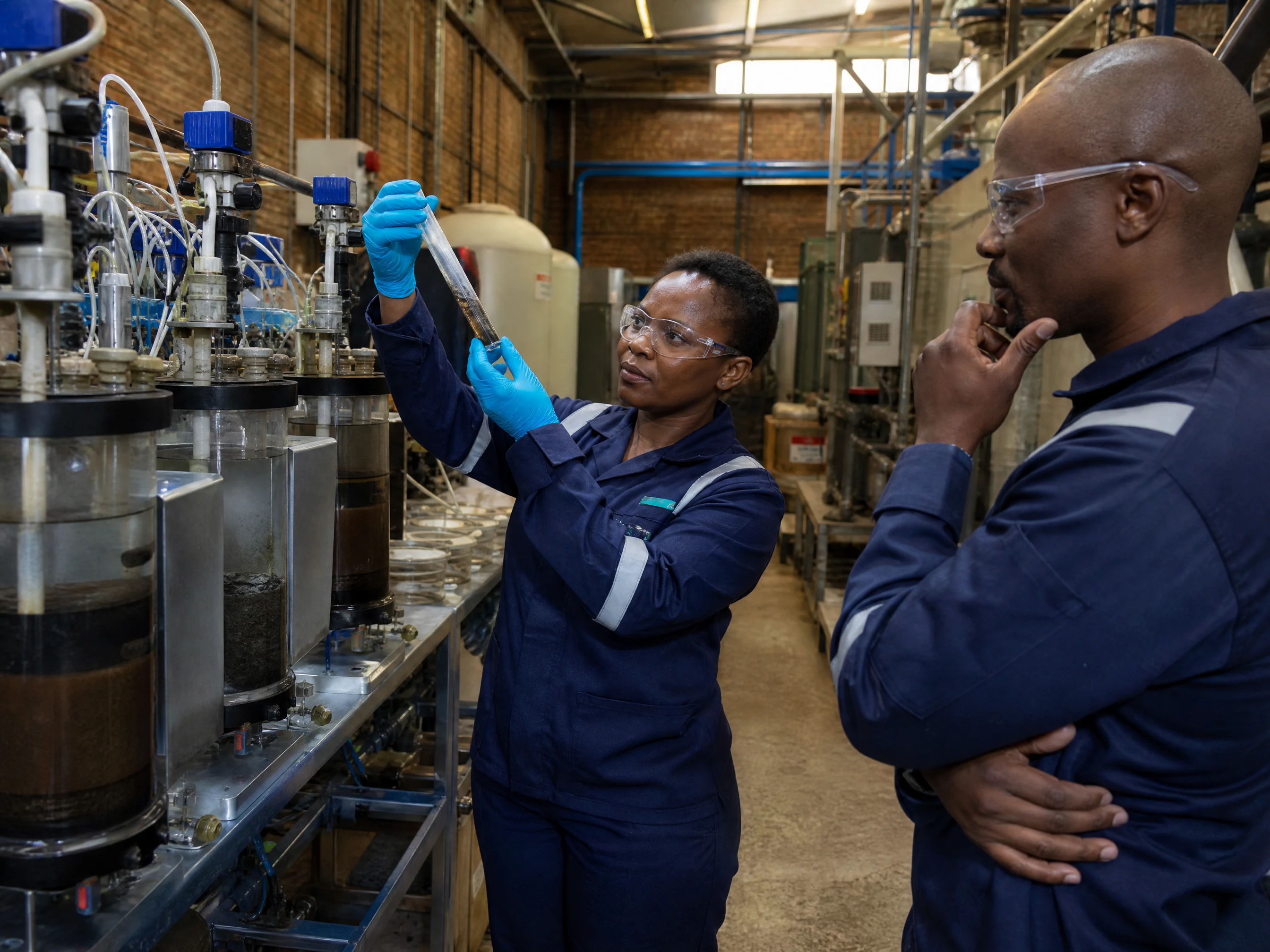
Solution chemistry has to be measured
A residue is not a clean ore. It carries whatever the upstream process left behind, and those species affect leach kinetics, reagent consumption and downstream purification in ways that are difficult to predict.
Bench-scale work under controlled conditions establishes what actually dissolves, at what rate, at what reagent cost, and what else comes with it.
- Leach kinetics and reagent consumption measured, not assumed
- Deleterious species identified before they reach purification
- Closed-circuit behaviour confirmed at pilot scale where risk warrants
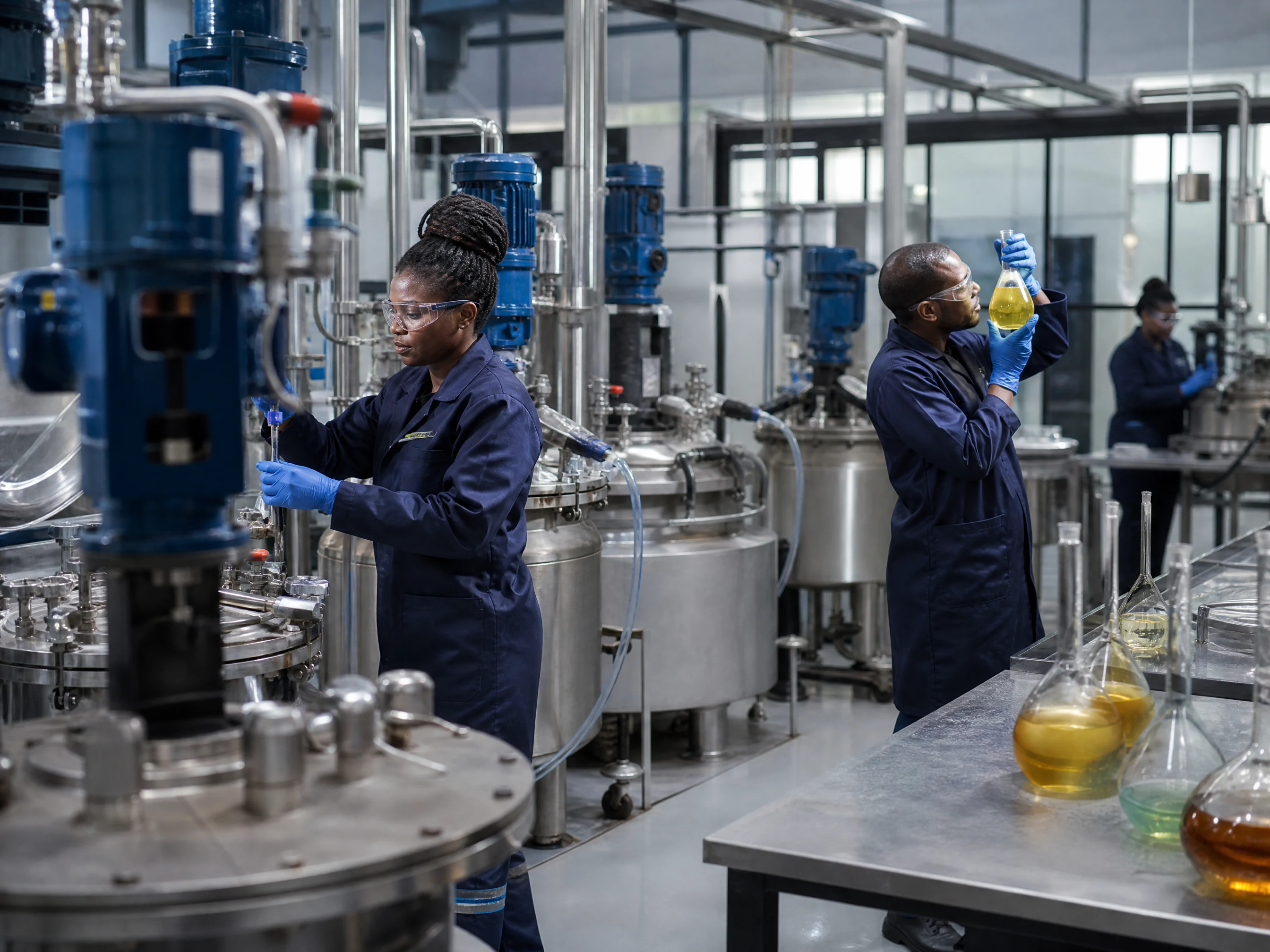
Aqueous stages inside a wider route
Hydrometallurgical stages are often preceded by physical separation, so the leach sees a concentrated feed rather than the full residue mass. That reduces reagent consumption and vessel sizing considerably.
Where a thermal pre-treatment changes the phase the target sits in, a combined route can succeed where neither approach works alone.
Process DevelopmentFrequently asked
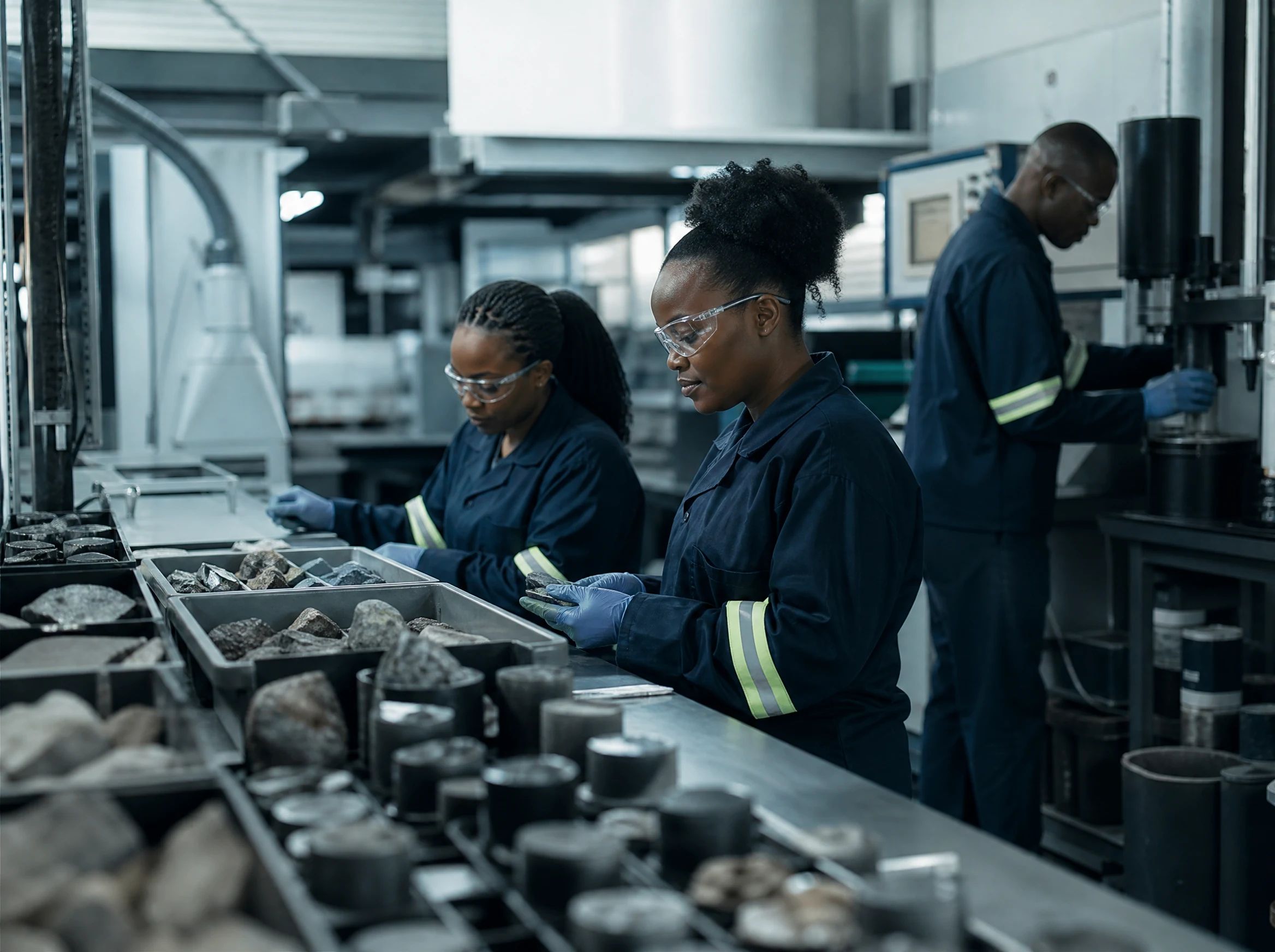
Where selectivity is needed, where the target sits at low concentration, or where the energy cost of a thermal route is not justified by the value recovered. It suits finer material well, since it does not depend on physical liberation in the same way separation does.
Because a residue carries species the upstream process left behind, and those affect leach kinetics, reagent consumption and purification. Predicting that from composition alone is unreliable — it has to be measured.
Frequently, and usually to advantage. Physical pre-concentration reduces the mass entering the leach, which lowers reagent consumption and vessel sizing while raising the concentration of the target.
Discuss your material or process challenge
If you hold a residue stream, by-product, tailings resource or slag with possible recoverable value — or a process that is not performing as designed — we are interested in the technical detail.