Ferroalloy Residue Recovery & Beneficiation
Recovering alloy value and improving utilisation of residual streams.
Ferroalloy production generates slags, fines and residues that frequently retain recoverable alloy content. Whether that content can be released economically depends on how it is held — entrained metal behaves very differently from chemically bound species.
Why ferroalloy residues?
Ferroalloy operations generate residue in volume and with reasonable consistency, which is exactly what makes a recovery project practical. Entrained alloy droplets in slag are often physically recoverable; oxidised or chemically bound species are not.
Establishing which of those situations applies — and in what proportion across the size fractions — is the first piece of work.
Release entrained metal, upgrade the rest
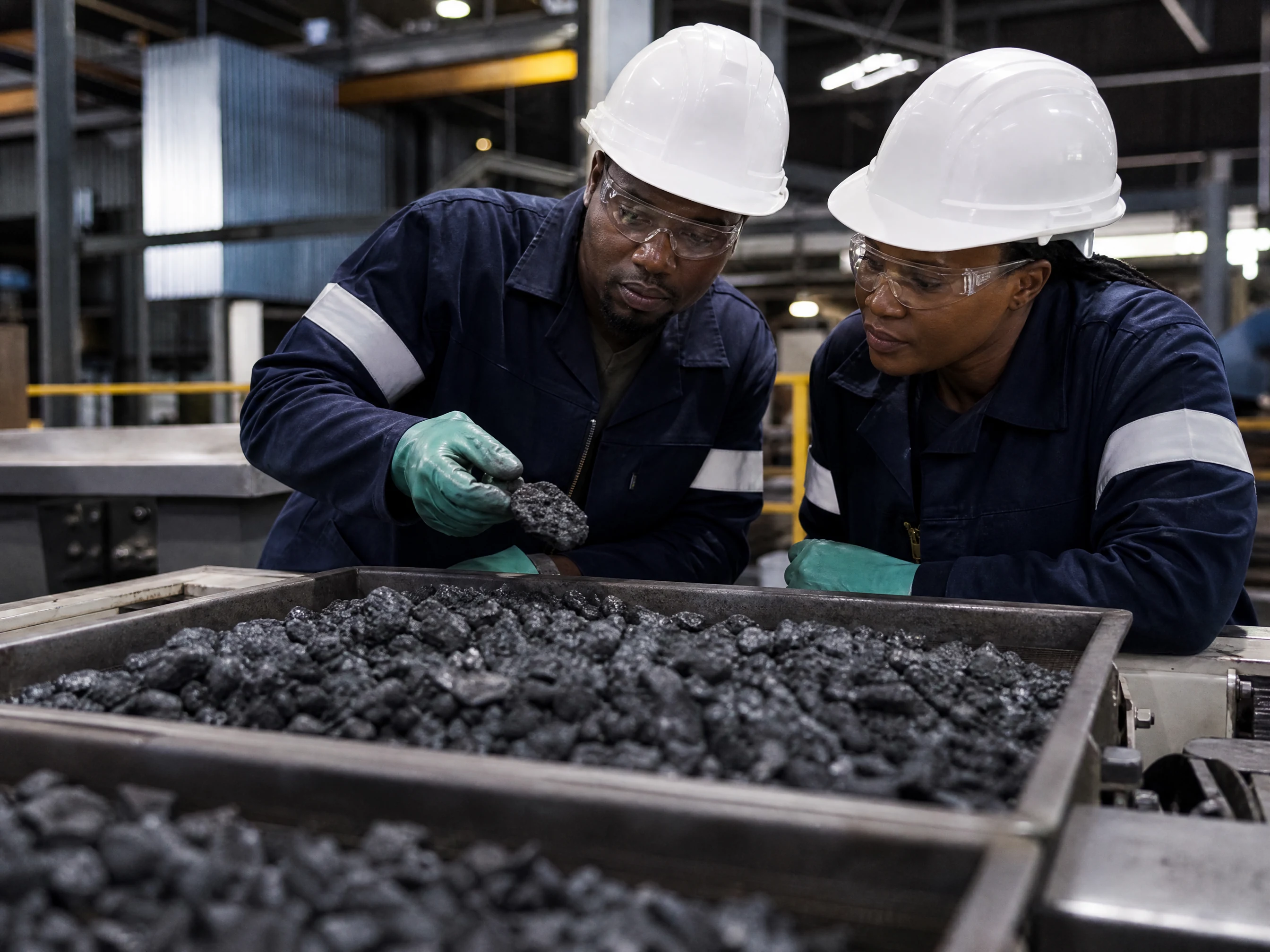
The usual objective is twofold: recover entrained alloy that separation can release, and assess whether the remaining fraction can be upgraded into a saleable product rather than returned to the dump.
Both parts matter. A route that recovers metal but leaves the same residue volume behind has solved only half the problem.
- Entrained alloy recovered through physical separation
- Remaining fraction assessed for upgrade or alternative use
- Reduced residue volume as an explicit objective
Technologies considered
Shortlisted on material behaviour, then discriminated by bench test work.
Gravity Separation
Conventional and enhanced gravity separation where density contrast supports recovery.
Dense Medium Separation
DMS for coarse pre-concentration and early rejection of barren material.
Flotation
Surface-chemistry-based separation for finer fractions and complex mineralogy.
Magnetic Separation
Magnetic and electromagnetic separation across a range of intensities.
Pre-Reduction
Thermal pre-treatment to change phase behaviour ahead of downstream recovery.
Integrated Routes
Combined circuits where no single technology carries the full recovery duty.
Combining physical and thermal stages
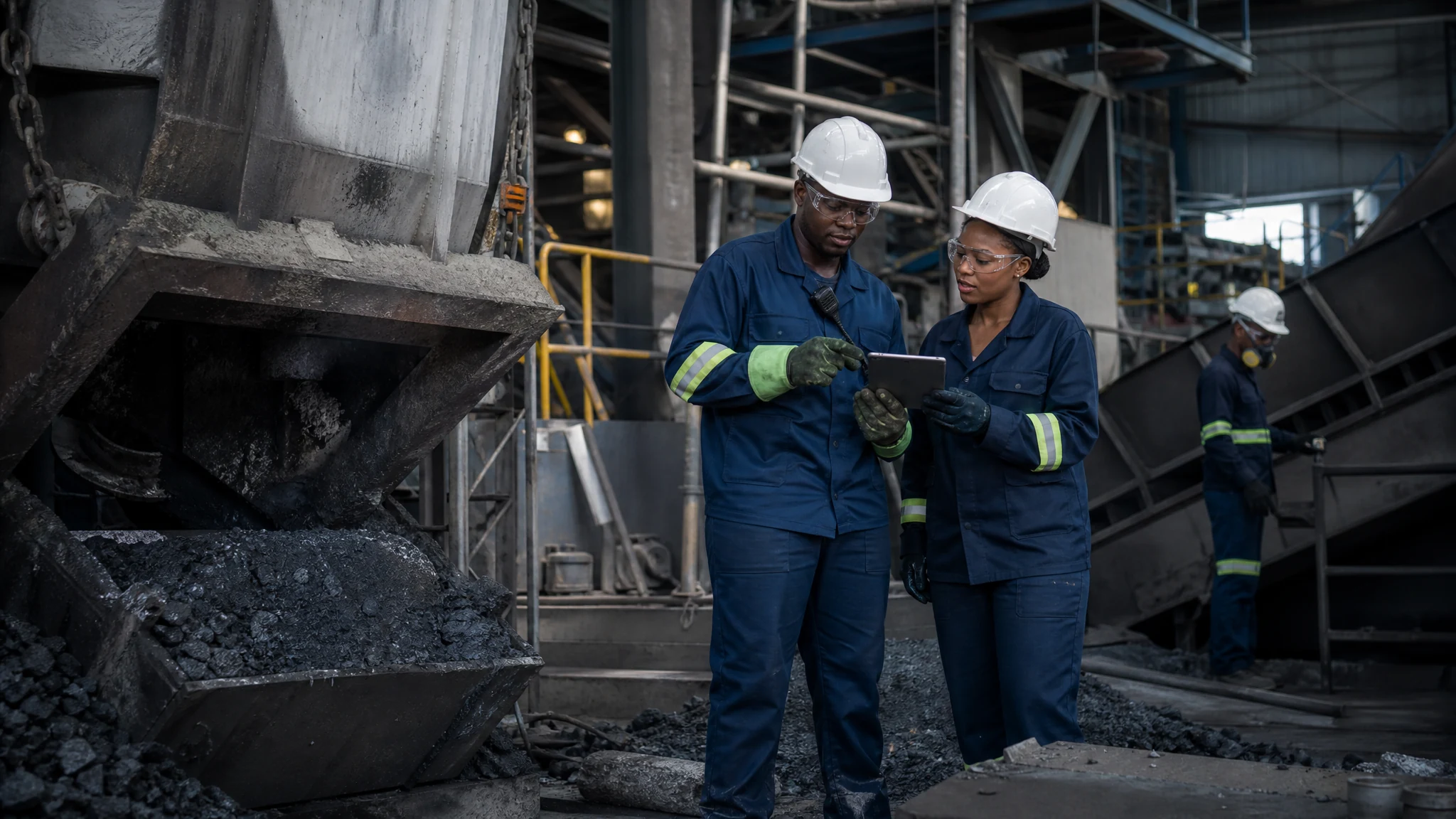
Where separation alone cannot release the target, a pre-reduction or smelting stage may be justified — but only if the recovered value carries the energy cost.
Combined routes are developed and balanced as one system, with the separation stage sized to deliver the grade the thermal stage needs.
PyrometallurgyHow the route is proven
No scale-up recommendation is made ahead of the test work that supports it.
Characterise
Chemistry, mineralogy, particle size and deportment of the target element.
Screen
Compare candidate technologies against how the material actually behaves.
Bench Test
Controlled bench-scale work designed to discriminate between routes.
Model
Mass and energy balances to size the circuit and expose sensitivities.
Pilot
Integrated pilot running where scale-dependent behaviour carries real risk.
Engineer
Process engineering and implementation support for a proven route.
Frequently asked
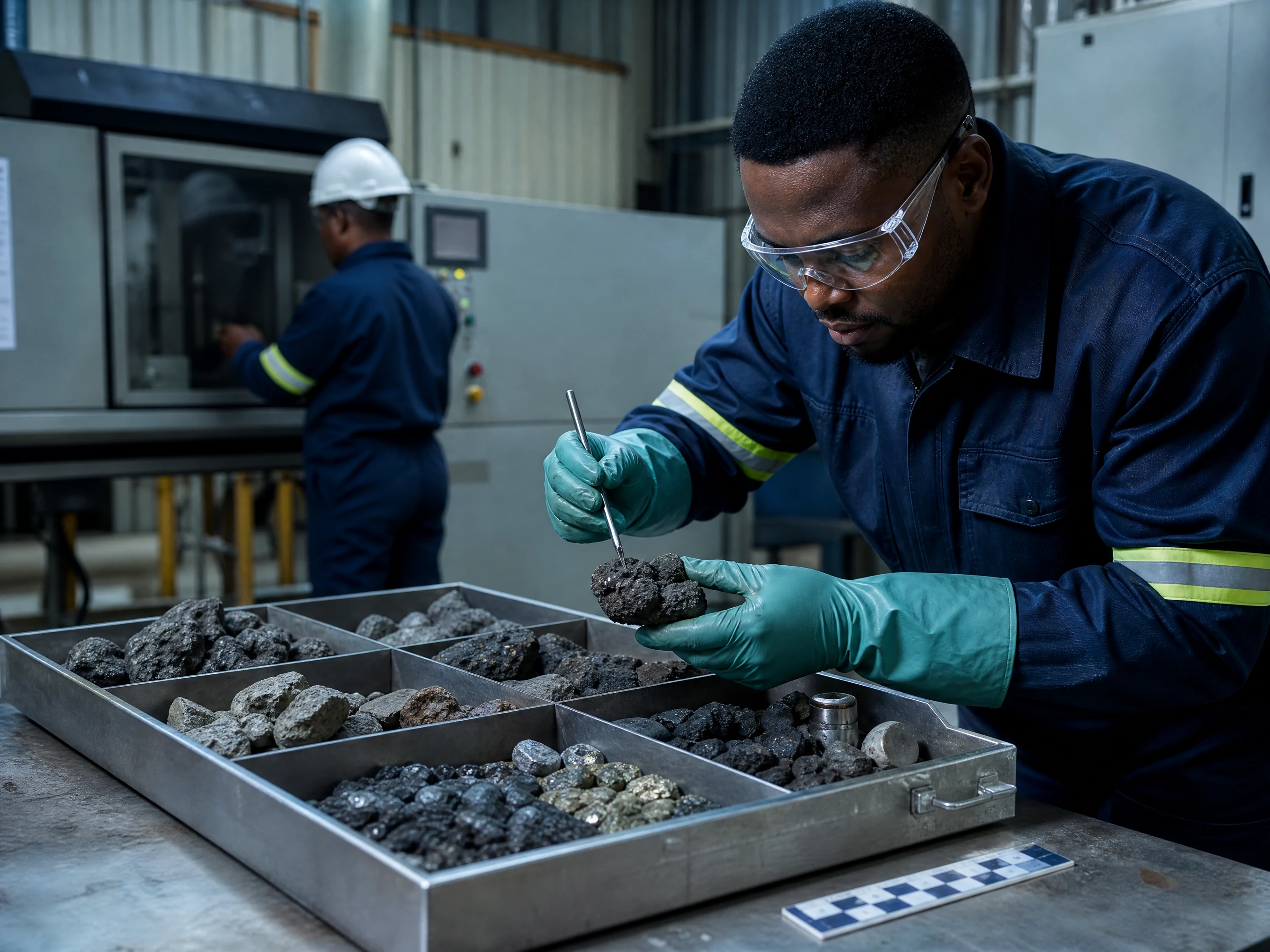
By first establishing how the alloy is held. Entrained metal droplets respond to density and magnetic separation; chemically bound species do not, and require a thermal or aqueous stage. Bench work on the actual residue settles which applies.
Yes, and it is common. Physical pre-concentration reduces the mass entering a thermal stage while raising its grade, which improves the energy per unit recovered and is often what makes the thermal stage viable.
Recovery and grade under realistic conditions, closed mass and energy balances, reagent and energy demand, and the behaviour of the circuit once recycle streams are running.
Discuss your material or process challenge
If you hold a residue stream, by-product, tailings resource or slag with possible recoverable value — or a process that is not performing as designed — we are interested in the technical detail.