Technical Expertise Across the Metallurgical Process Lifecycle
Thermal and aqueous metallurgy, modelling, test work and plant engineering.
Recovery routes rarely sit inside one discipline. Most combine physical separation with thermal or aqueous processing, and all of them need the modelling and test work to size, balance and prove the result. These are the capabilities we apply.
What does VIIS cover technically?
Capability spans the full process lifecycle: defining the problem, screening technologies, developing and modelling a flowsheet, validating it through bench and pilot test work, and supporting the plant engineering that follows.
The disciplines below are applied in combination rather than in isolation — which is usually what a residue recovery problem requires.
Four areas of capability
Each has a dedicated page covering scope and method in more detail.
Pyrometallurgy
DC arc, SAF and OBF electric smelting systems, process analysis and plant engineering.
Hydrometallurgy
Acid leaching, solvent extraction, precipitation, ion exchange and electrowinning.
Process Modelling
FactSage, HSC, STAR-CCM+ and MATLAB applied to balances and simulation.
Process Technologies
Gravity, enhanced gravity, DMS, flotation, magnetic separation and pre-reduction.
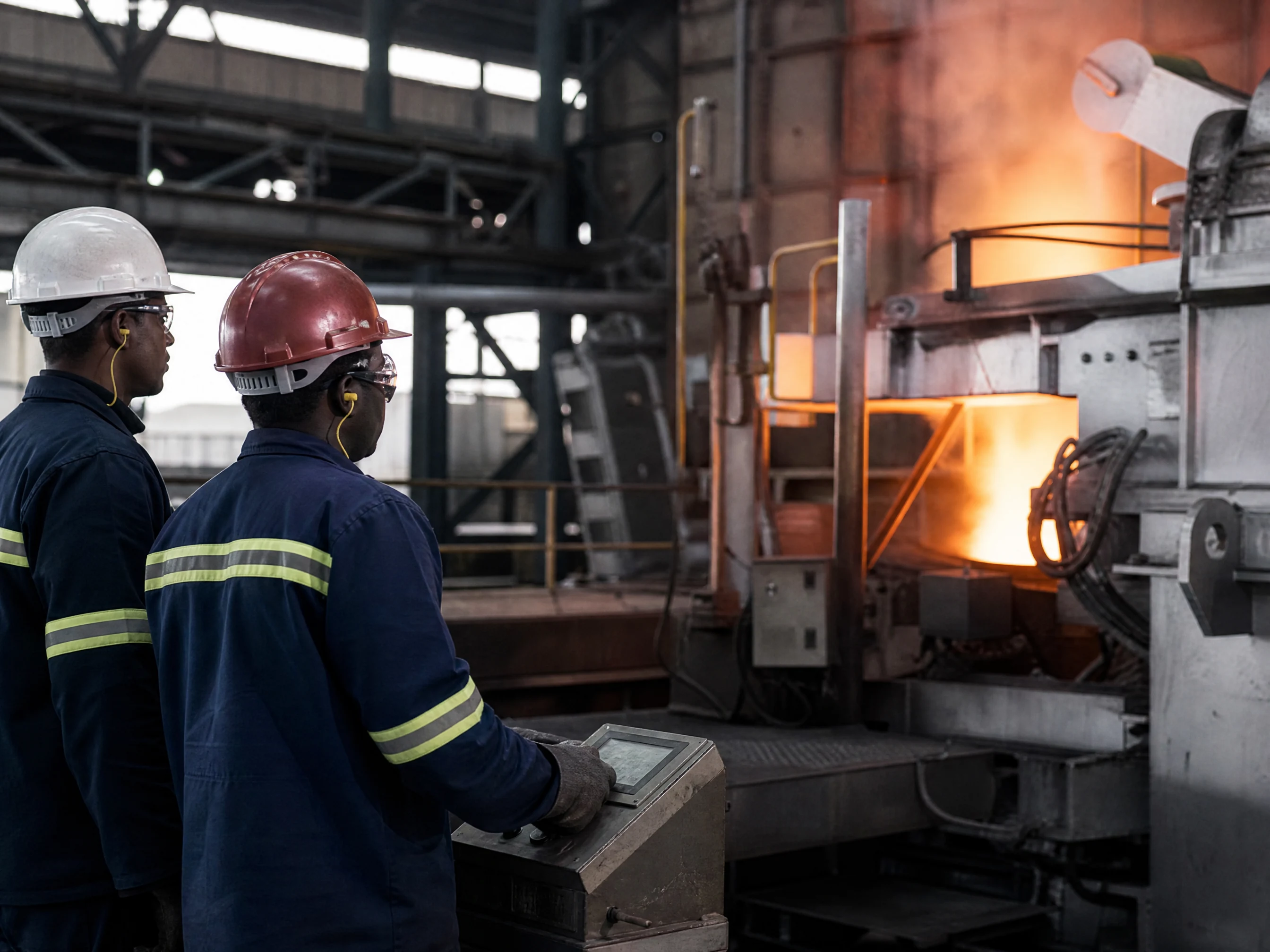
High-temperature processing and the plant around it
Experience covers DC arc, submerged arc (SAF) and open bath furnace (OBF) electric smelting systems, together with the process analysis, plant design, commissioning and optimisation work that surrounds them.
Thermal steps are frequently one stage in a wider recovery route rather than the whole of it.
Pyrometallurgy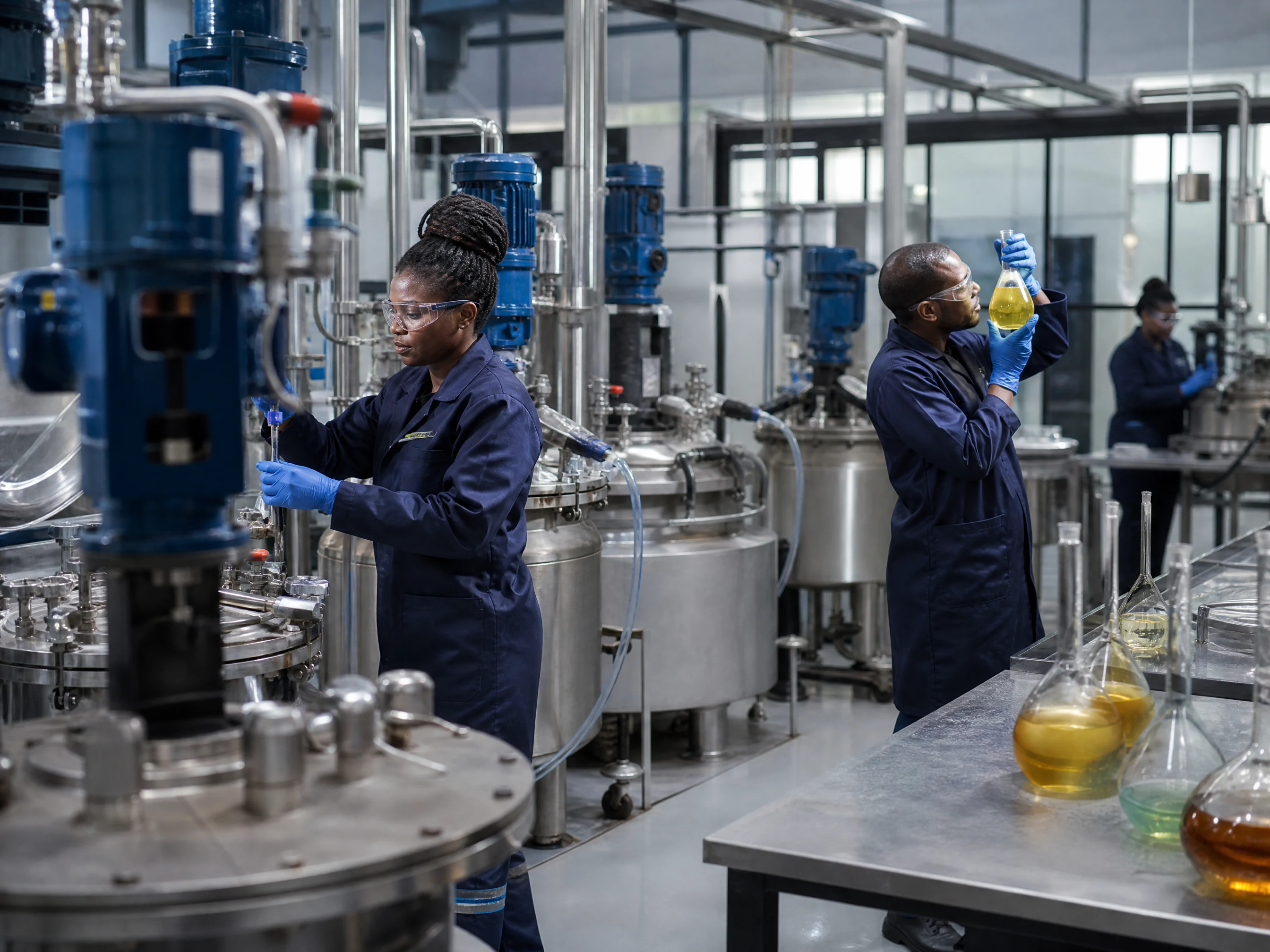
Aqueous extraction and solution purification
Acid leaching, solvent extraction, precipitation, ion exchange and electrowinning — developed and confirmed under controlled test conditions before any route is proposed.
Solution chemistry rarely behaves as predicted on a real residue, which is why the test work matters more here than almost anywhere else.
HydrometallurgySeparation technologies we apply
Selection follows liberation, particle size, density contrast and mineralogy.
Gravity Separation
Conventional and enhanced gravity separation where density contrast supports recovery.
Dense Medium Separation
DMS for coarse pre-concentration and early rejection of barren material.
Flotation
Surface-chemistry-based separation for finer fractions and complex mineralogy.
Magnetic Separation
Magnetic and electromagnetic separation across a range of intensities.
Pre-Reduction
Thermal pre-treatment to change phase behaviour ahead of downstream recovery.
Integrated Routes
Combined circuits where no single technology carries the full recovery duty.
Combining operations to match a material
The point of holding these capabilities together is being able to combine them.
Characterise
Chemistry, mineralogy, particle size and deportment of the target element.
Screen
Compare candidate technologies against how the material actually behaves.
Bench Test
Controlled bench-scale work designed to discriminate between routes.
Model
Mass and energy balances to size the circuit and expose sensitivities.
Pilot
Integrated pilot running where scale-dependent behaviour carries real risk.
Engineer
Process engineering and implementation support for a proven route.
Discuss your material or process challenge
If you hold a residue stream, by-product, tailings resource or slag with possible recoverable value — or a process that is not performing as designed — we are interested in the technical detail.