
Slag Metal Recovery & Beneficiation
Recovering entrained metal and assessing slag as a product in its own right.
Slag is a by-product whose recoverable content depends on its composition and on how it was cooled and handled. Entrained metal droplets are frequently recoverable by physical means; oxidised species held in the slag matrix are not.
What makes slag recoverable?
Two things: what the slag contains, and the form it is in. Entrained metallic droplets, common where tapping and cooling practice allowed them to be trapped, respond well to crushing followed by density or magnetic separation.
Species chemically bound in the slag matrix require a thermal or aqueous stage to release, which changes the economics substantially. Cooling history matters too — it affects crystallinity, and therefore how the slag breaks and liberates.
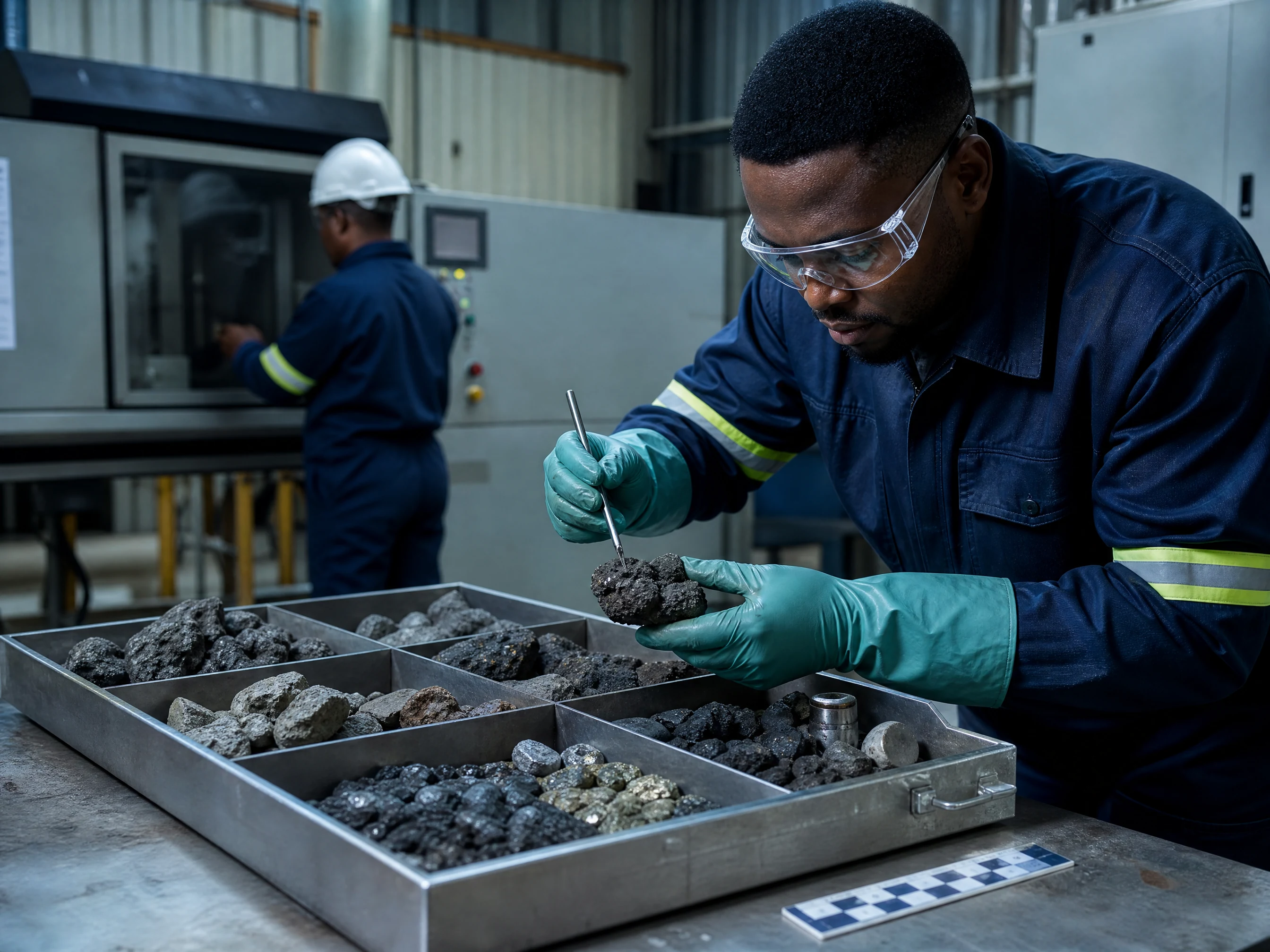
Composition, mineralogy and cooling history
Assessment covers what the slag contains, how the target is held, and how the material breaks under crushing — because liberation size determines which separation technologies can work at all.
Cooling history is worth establishing where records allow. Rapidly quenched and slowly cooled slag from the same furnace can behave very differently.
- Bulk chemistry and mineralogical phase identification
- Liberation assessment across the crushed size fractions
- Cooling and handling history where it can be established
Technologies considered
Shortlisted on material behaviour, then discriminated by bench test work.
Gravity Separation
Conventional and enhanced gravity separation where density contrast supports recovery.
Dense Medium Separation
DMS for coarse pre-concentration and early rejection of barren material.
Flotation
Surface-chemistry-based separation for finer fractions and complex mineralogy.
Magnetic Separation
Magnetic and electromagnetic separation across a range of intensities.
Pre-Reduction
Thermal pre-treatment to change phase behaviour ahead of downstream recovery.
Integrated Routes
Combined circuits where no single technology carries the full recovery duty.
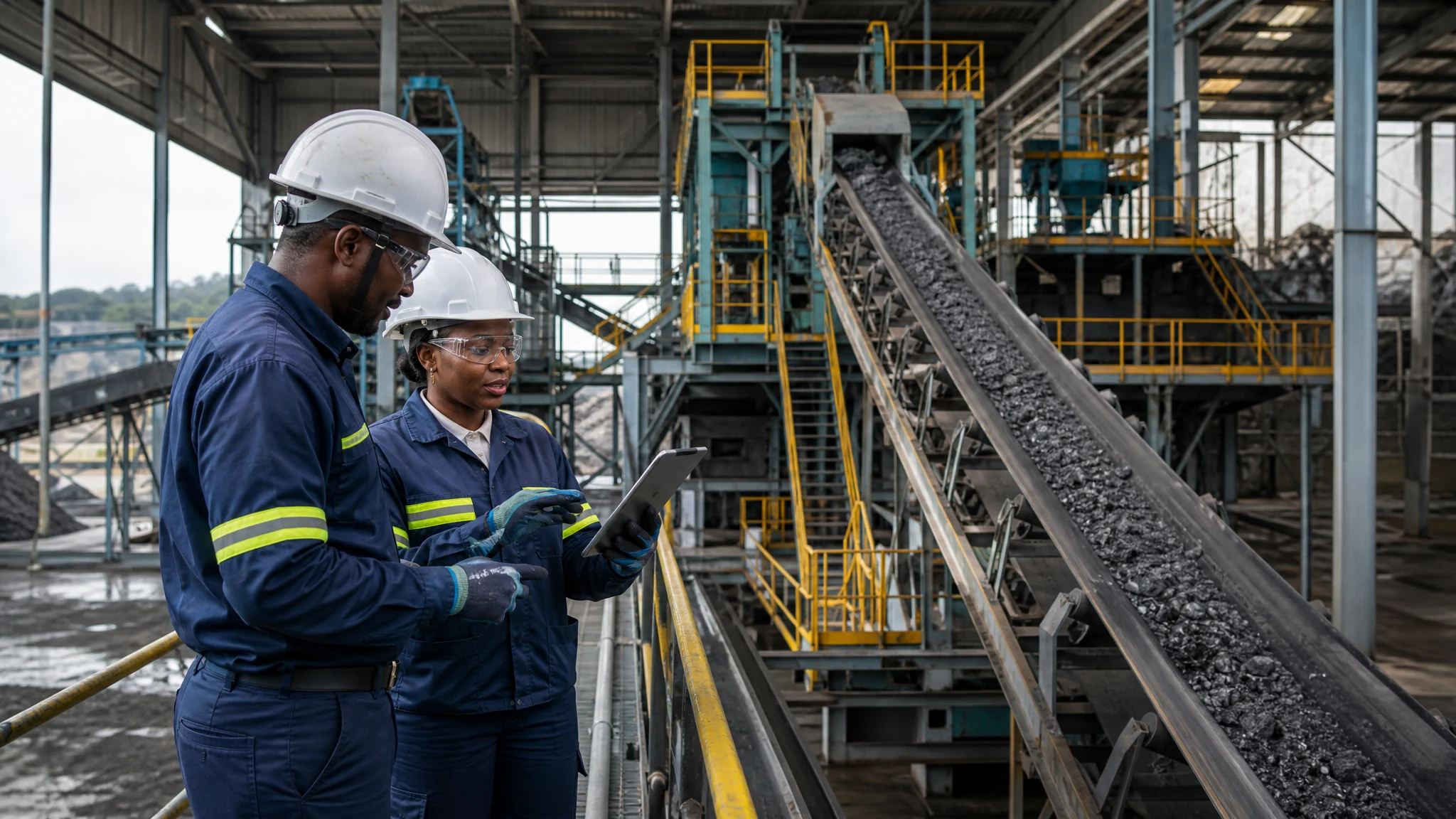
Recovered metal, and a usable remainder
Beyond the entrained metal, the remaining slag fraction may itself have value as an aggregate or industrial input, depending on composition and its stability.
Assessing both together often makes a project work where the metal recovery alone would not carry it.
SustainabilityHow the route is proven
No scale-up recommendation is made ahead of the test work that supports it.
Characterise
Chemistry, mineralogy, particle size and deportment of the target element.
Screen
Compare candidate technologies against how the material actually behaves.
Bench Test
Controlled bench-scale work designed to discriminate between routes.
Model
Mass and energy balances to size the circuit and expose sensitivities.
Pilot
Integrated pilot running where scale-dependent behaviour carries real risk.
Engineer
Process engineering and implementation support for a proven route.
Frequently asked
Whether the target is present as entrained metal or chemically bound in the matrix, and at what liberation size it reports after crushing. Those two answers determine both the technology and the economics.
Frequently. Crushing and density separation to recover entrained metal, followed by a thermal or aqueous stage for bound species where the value justifies it. Whether the second stage is worth adding is a test-work question.
Because crushing and liberation behaviour at scale, together with the abrasiveness of the material and circuit recycle loads, are difficult to predict reliably from bench work alone.
Discuss your material or process challenge
If you hold a residue stream, by-product, tailings resource or slag with possible recoverable value — or a process that is not performing as designed — we are interested in the technical detail.