Metallurgical Process & Flowsheet Development
Assembling proven unit operations into a route that works on your material.
Flowsheet development is the work of turning a recovery objective into a defined sequence of unit operations, each sized and balanced, with the evidence to show it behaves as intended. It is what has to happen before scale-up can be responsibly considered.
What is process development?
Process development takes a feed material and a recovery objective and produces a defined flowsheet: which unit operations, in what order, at what duty, with what expected recovery and consumption.
It precedes scale-up because scale-up commits capital. The purpose of the development phase is to find out what the material will actually do while the cost of being wrong is still small.
How a flowsheet is built
Feed & Problem Definition
Define the material, the constraints, the target product and the recovery objective before considering any technology.
Technology Screening
Select candidate unit operations and metallurgical pathways that suit how the material behaves.
Flowsheet Development
Assemble proven unit operations into an integrated route with defined duties and streams.
Mass & Energy Balances
Close the balances across the circuit to expose where recovery and energy demand really sit.
Process Modelling
Simulate and compare scenarios to size equipment and test the assumptions.
Bench & Pilot Validation
Verify technical performance under controlled and then integrated conditions.
Optimisation & Plant Support
Carry the proven route into implementation and improve it against real operating data.
Balances and simulation, used to decide
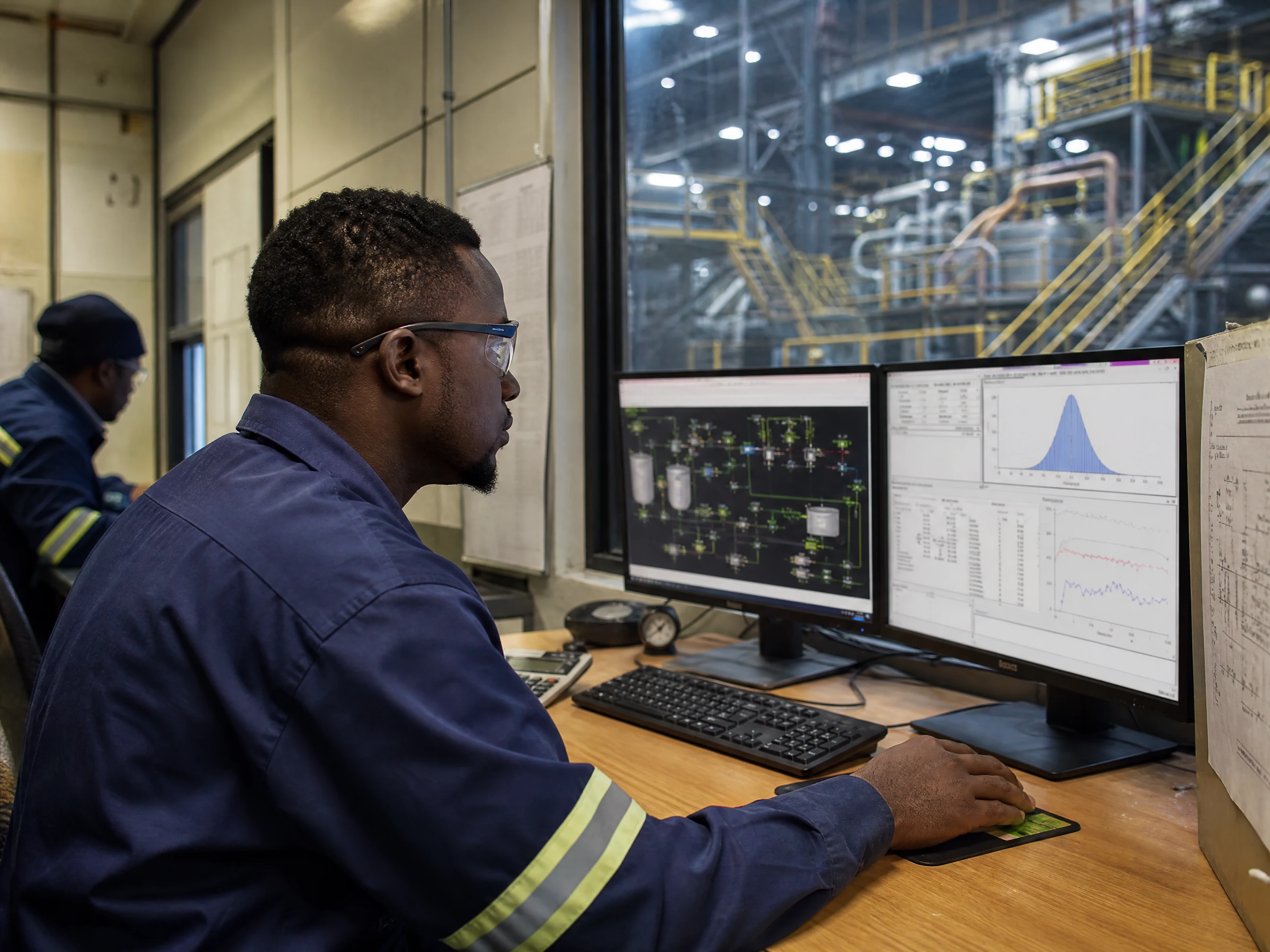
Modelling earns its place when it changes a decision. We use it to size equipment, compare competing routes on a common basis, and identify which assumptions the outcome is most sensitive to.
FactSage, HSC, STAR-CCM+ and MATLAB are applied where each is appropriate. The output that matters is not the model — it is the narrowing of options it allows.
- Mass and energy balances closed across the full circuit
- Scenario comparison on a consistent basis
- Sensitivity analysis to find what actually drives the result
Most recovery problems need more than one stage
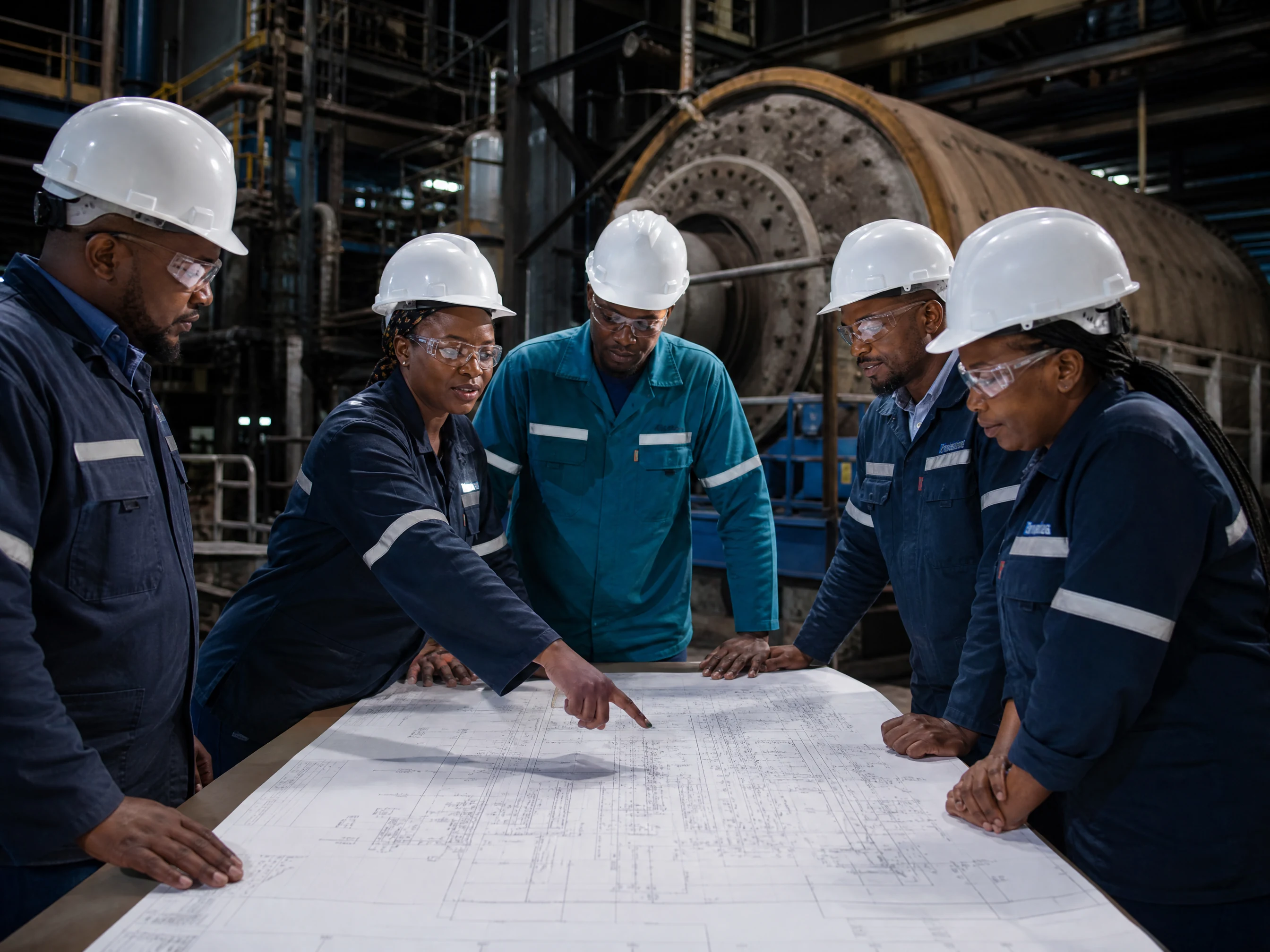
A single unit operation rarely carries the full recovery duty on a residue stream. Physical pre-concentration ahead of a thermal or aqueous stage is common, and each stage changes what the next one receives.
Developing the route as one integrated system — rather than a chain of independently optimised steps — is what keeps the balances honest.
Process TechnologiesFrequently asked
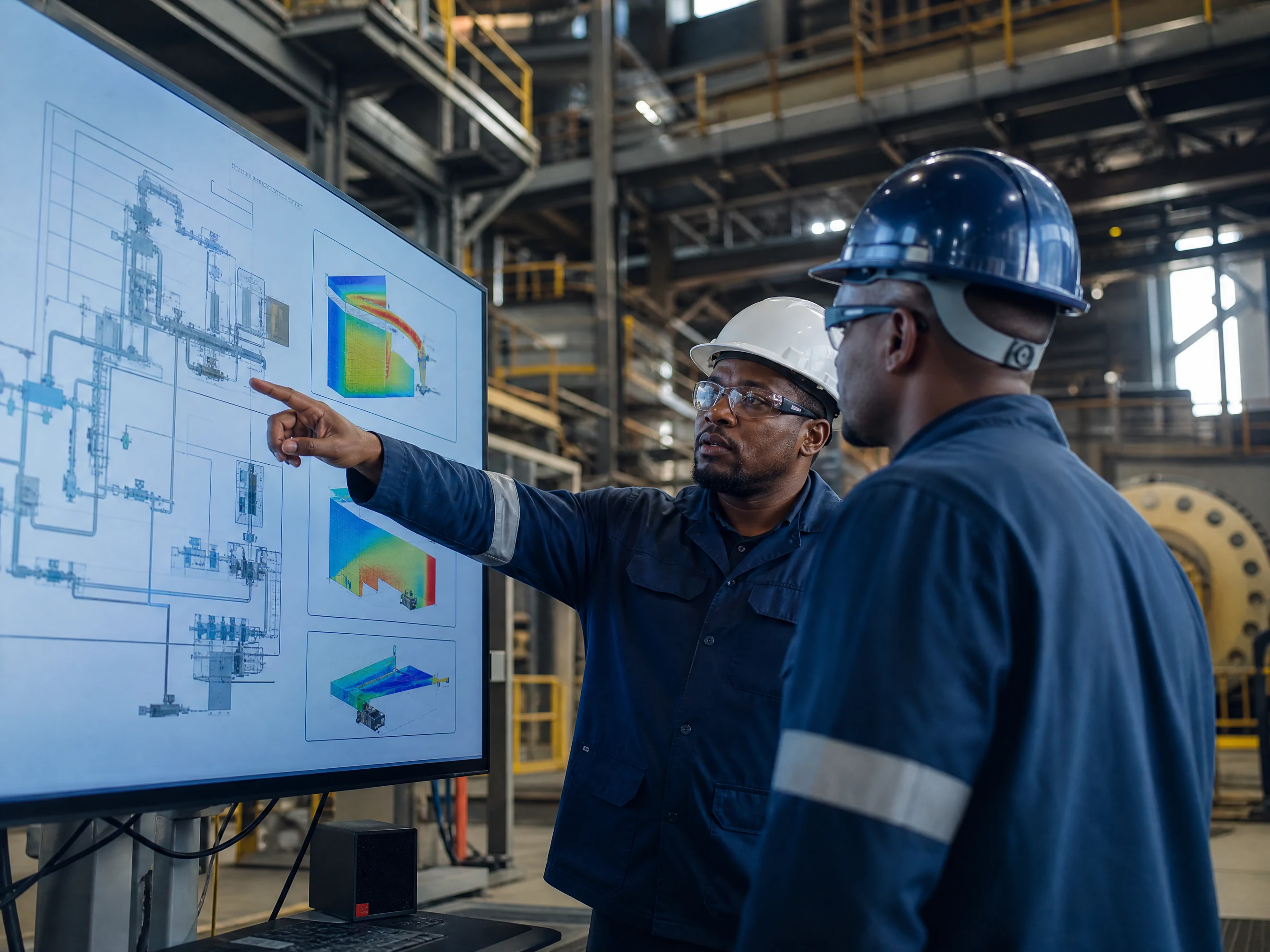
A defined sequence of unit operations showing how feed material moves through the circuit, what each stage does to it, and what streams leave. A useful flowsheet carries the mass and energy balance with it, not just the block diagram.
When bench results are promising but scale-dependent behaviour carries genuine risk to the decision — recycle loads, dewatering, closed-circuit reagent consumption or thermal profiles. It is scoped to the exposure, not run as a formality.
On a common basis: the same feed, the same target product specification, balances closed the same way. Comparing routes that were assessed under different assumptions produces a confident answer to the wrong question.
Discuss your material or process challenge
If you hold a residue stream, by-product, tailings resource or slag with possible recoverable value — or a process that is not performing as designed — we are interested in the technical detail.